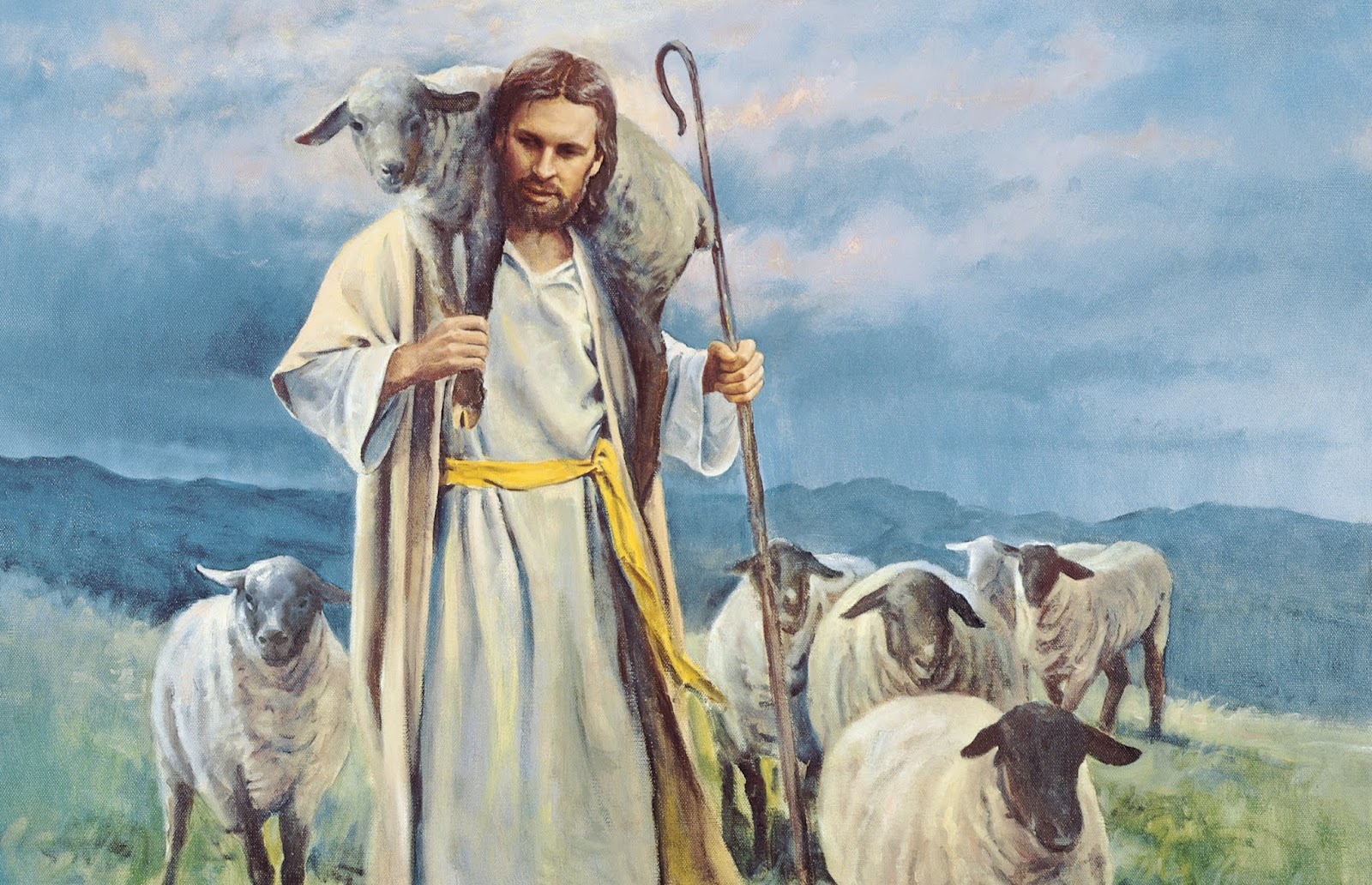
Wednesday, September 19, 2018

Word Wide Open: The Twenty-Fifth Sunday in Ordinary Time (B)


First Reading (Wisdom 2:12, 17-20)

The wicked say:
Let us beset the just one, because he is obnoxious to us;
he sets himself against our doings,
reproaches us for transgressions of the law
and charges us with violations of our training.
Let us see whether his words be true;
let us find out what will happen to him.
For if the just one be the son of God, God will defend him
and deliver him from the hand of his foes.
With revilement and torture let us put the just one to the test
that we may have proof of his gentleness
and try his patience.
Let us condemn him to a shameful death;
for according to his own words, God will take care of him.


Asking the big questions: Is there anything that stuck out to you from this reading? Why is the just one "obnoxious" to the wicked? How does God defend His children from their foes?

Responsorial Pslam (Psalm 54:3-4, 5, 6, 8)

R. (6b) The Lord upholds my life.
O God, by your name save me,
and by your might defend my cause.
O God, hear my prayer;
hearken to the words of my mouth.
R. The Lord upholds my life.
For the haughty men have risen up against me,
the ruthless seek my life;
they set not God before their eyes.
R. The Lord upholds my life.
Behold, God is my helper;
the Lord sustains my life.
Freely will I offer you sacrifice;
I will praise your name, O LORD, for its goodness.
R. The Lord upholds my life.


Second Reading (James 3:16-4:3)

Beloved:
Where jealousy and selfish ambition exist,
there is disorder and every foul practice.
But the wisdom from above is first of all pure,
then peaceable, gentle, compliant,
full of mercy and good fruits,
without inconstancy or insincerity.
And the fruit of righteousness is sown in peace
for those who cultivate peace.

Where do the wars
and where do the conflicts among you come from?
Is it not from your passions
that make war within your members?
You covet but do not possess.
You kill and envy but you cannot obtain;
you fight and wage war.
You do not possess because you do not ask.
You ask but do not receive,
because you ask wrongly, to spend it on your passions.


Asking the big questions: Is there anything that stuck out to you from this reading? Where do all of these negative feelings and actions come from? How does having peace show us we are doing God's will? How do we often "ask wrongly?"


Gospel (Mark 9:30-37)

Jesus and his disciples left from there and began a journey through Galilee,
but he did not wish anyone to know about it.
He was teaching his disciples and telling them,
“The Son of Man is to be handed over to men
and they will kill him,
and three days after his death the Son of Man will rise.”
But they did not understand the saying,
and they were afraid to question him.

They came to Capernaum and, once inside the house,
he began to ask them,
“What were you arguing about on the way?”
But they remained silent.
They had been discussing among themselves on the way
who was the greatest.
Then he sat down, called the Twelve, and said to them,
“If anyone wishes to be first,
he shall be the last of all and the servant of all.”
Taking a child, he placed it in their midst,
and putting his arms around it, he said to them,
“Whoever receives one child such as this in my name, receives me;
and whoever receives me,
receives not me but the One who sent me.”

Asking the big questions: Is there anything that stuck out to you from this Gospel reading? Why do the disciples not understand what Jesus is saying? What does it mean to be a servant of all? How is a child an example of strong faith?

Sign up for the March for Life!

Sign up for the Winter Retreat!

Wednesday, September 12, 2018

Word Wide Open: The Twenty-Fourth Sunday in Ordinary Time (B)


First Reading (Isaiah 50:5-9A)

The Lord GOD opens my ear that I may hear;
and I have not rebelled,
have not turned back.
I gave my back to those who beat me,
my cheeks to those who plucked my beard;
my face I did not shield
from buffets and spitting.

The Lord GOD is my help,
therefore I am not disgraced;
I have set my face like flint,
knowing that I shall not be put to shame.
He is near who upholds my right;
if anyone wishes to oppose me,
let us appear together.
Who disputes my right?
Let that man confront me.
See, the Lord GOD is my help;
who will prove me wrong?


Asking the big questions: Is there anything that stuck out to you from this reading? Why should we freely give our persecutors our back for beating? How does the Lord help us in times of suffering or persecution?


Responsorial Pslam (Psalm 116:1-2, 3-4, 5-6, 8-9)

R. (9) I will walk before the Lord, in the land of the living.
I love the LORD because he has heard
my voice in supplication,
because he has inclined his ear to me
the day I called.
R. I will walk before the Lord, in the land of the living.
The cords of death encompassed me;
the snares of the netherworld seized upon me;
I fell into distress and sorrow,
and I called upon the name of the LORD,
"O LORD, save my life!"
R. I will walk before the Lord, in the land of the living.
Gracious is the LORD and just;
yes, our God is merciful.
The LORD keeps the little ones;
I was brought low, and he saved me.
R. I will walk before the Lord, in the land of the living.
For he has freed my soul from death,
my eyes from tears, my feet from stumbling.
I shall walk before the Lord
in the land of the living.
R. I will walk before the Lord, in the land of the living.


Second Reading (James 2:14-18)

What good is it, my brothers and sisters,
if someone says he has faith but does not have works?
Can that faith save him?
If a brother or sister has nothing to wear
and has no food for the day,
and one of you says to them,
"Go in peace, keep warm, and eat well, "
but you do not give them the necessities of the body,
what good is it?
So also faith of itself,
if it does not have works, is dead.

Indeed someone might say,
"You have faith and I have works."
Demonstrate your faith to me without works,
and I will demonstrate my faith to you from my works.


Asking the big questions: Is there anything that stuck out to you from this reading? What are good works? What are good works without faith? Why is faith without good works dead? 


Gospel (Mark 8:27-35)

Jesus and his disciples set out
for the villages of Caesarea Philippi.
Along the way he asked his disciples,
"Who do people say that I am?"
They said in reply,
"John the Baptist, others Elijah,
still others one of the prophets."
And he asked them,
"But who do you say that I am?"
Peter said to him in reply,
"You are the Christ."
Then he warned them not to tell anyone about him.

He began to teach them
that the Son of Man must suffer greatly
and be rejected by the elders, the chief priests, and the scribes,
and be killed, and rise after three days.
He spoke this openly.
Then Peter took him aside and began to rebuke him.
At this he turned around and, looking at his disciples,
rebuked Peter and said, "Get behind me, Satan.
You are thinking not as God does, but as human beings do."

He summoned the crowd with his disciples and said to them,
"Whoever wishes to come after me must deny himself,
take up his cross, and follow me.
For whoever wishes to save his life will lose it,
but whoever loses his life for my sake
and that of the gospel will save it."

Asking the big questions: Is there anything that stuck out to you from this Gospel reading? Why does Jesus rebuke Peter? What does Jesus mean that Peter thinks as humans do? How do we deny ourselves and follow Christ?

Sign up for the March for Life!

Sign up for the Winter Retreat!

Wednesday, September 5, 2018

Word Wide Open: The Twenty-Third Sunday in Ordinary Time (B)


First Reading (Isaiah 35:4-7A)

Thus says the LORD:
Say to those whose hearts are frightened:
Be strong, fear not!
Here is your God,
he comes with vindication;
with divine recompense
he comes to save you.
Then will the eyes of the blind be opened,
the ears of the deaf be cleared;
then will the lame leap like a stag,
then the tongue of the mute will sing.
Streams will burst forth in the desert,
and rivers in the steppe.
The burning sands will become pools,
and the thirsty ground, springs of water.

Asking the big questions: Is there anything that stuck out to you from this reading? How does God comfort those who are frightened or worried? Why do people turn away from God in times of fear or suffering?


Responsorial Pslam (Psalm 146:6-7, 8-9, 9-10)

R. (1b) Praise the Lord, my soul!
The God of Jacob keeps faith forever,
secures justice for the oppressed,
gives food to the hungry.
The LORD sets captives free.
R. Praise the Lord, my soul!
The LORD gives sight to the blind;
the LORD raises up those who were bowed down.
The LORD loves the just;
the LORD protects strangers.
R. Praise the Lord, my soul!
The fatherless and the widow the LORD sustains,
but the way of the wicked he thwarts.
The LORD shall reign forever;
your God, O Zion, through all generations.
Alleluia.
R. Praise the Lord, my soul!


Second Reading (James 2:1-5)

My brothers and sisters, show no partiality
as you adhere to the faith in our glorious Lord Jesus Christ.
For if a man with gold rings and fine clothes
comes into your assembly,
and a poor person in shabby clothes also comes in,
and you pay attention to the one wearing the fine clothes
and say, “Sit here, please, ”
while you say to the poor one, “Stand there, ” or “Sit at my feet, ”
have you not made distinctions among yourselves
and become judges with evil designs?

Listen, my beloved brothers and sisters.
Did not God choose those who are poor in the world
to be rich in faith and heirs of the kingdom
that he promised to those who love him?

Asking the big questions: Is there anything that stuck out to you from this reading? What problem is James trying to point out? How do we do this in our everyday lives? How can we choose the "poor" in our lives? 


Gospel (Mark 7:31-37)

Again Jesus left the district of Tyre
and went by way of Sidon to the Sea of Galilee,
into the district of the Decapolis.
And people brought to him a deaf man who had a speech impediment
and begged him to lay his hand on him.
He took him off by himself away from the crowd.
He put his finger into the man’s ears
and, spitting, touched his tongue;
then he looked up to heaven and groaned, and said to him,
“Ephphatha!”— that is, “Be opened!” —
And immediately the man’s ears were opened,
his speech impediment was removed,
and he spoke plainly.
He ordered them not to tell anyone.
But the more he ordered them not to,
the more they proclaimed it.
They were exceedingly astonished and they said,
“He has done all things well.
He makes the deaf hear and the mute speak.”

Asking the big questions: Is there anything that stuck out to you from this Gospel reading? How can we learn to listen to the Lord better? Why did Jesus tell them to not speak of this miracle? 

Wednesday, August 29, 2018

Word Wide Open: The Twenty-second Sunday in Ordinary Time (B)


First Reading (Deuteronomy 4:1-2, 6-8)

Moses said to the people:
"Now, Israel, hear the statutes and decrees
which I am teaching you to observe,
that you may live, and may enter in and take possession of the land
which the LORD, the God of your fathers, is giving you.
In your observance of the commandments of the LORD, your God,
which I enjoin upon you,
you shall not add to what I command you nor subtract from it.
Observe them carefully,
for thus will you give evidence
of your wisdom and intelligence to the nations,
who will hear of all these statutes and say,
'This great nation is truly a wise and intelligent people.'
For what great nation is there
that has gods so close to it as the LORD, our God, is to us
whenever we call upon him?
Or what great nation has statutes and decrees
that are as just as this whole law
which I am setting before you today?"

Asking the big questions: Is there anything that stuck out to you from this reading? Why does living according to God's teachings help us live a better life? How is the Lord loving us by giving us these teachings? 


Responsorial Pslam (Psalm 15:2-3, 3-4, 4-5)

R. (1a) The one who does justice will live in the presence of the Lord.
Whoever walks blamelessly and does justice;
who thinks the truth in his heart
and slanders not with his tongue.
R. The one who does justice will live in the presence of the Lord.
Who harms not his fellow man,
nor takes up a reproach against his neighbor;
by whom the reprobate is despised,
while he honors those who fear the LORD.
R. The one who does justice will live in the presence of the Lord.
Who lends not his money at usury
and accepts no bribe against the innocent.
Whoever does these things
shall never be disturbed.
R. The one who does justice will live in the presence of the Lord.


Second Reading (James 1:17-18, 21B-22, 27)

Dearest brothers and sisters:
All good giving and every perfect gift is from above,
coming down from the Father of lights,
with whom there is no alteration or shadow caused by change.
He willed to give us birth by the word of truth
that we may be a kind of firstfruits of his creatures.

Humbly welcome the word that has been planted in you
and is able to save your souls.

Be doers of the word and not hearers only, deluding yourselves.

Religion that is pure and undefiled before God and the Father is this:
to care for orphans and widows in their affliction
and to keep oneself unstained by the world.

Asking the big questions: Is there anything that stuck out to you from this reading? How do we know all good things come from God? What does it mean to be a "doer" of the word? 


Gospel (Mark 7:1-8, 14-15, 21-23)

When the Pharisees with some scribes who had come from Jerusalem
gathered around Jesus,
they observed that some of his disciples ate their meals
with unclean, that is, unwashed, hands.
—For the Pharisees and, in fact, all Jews,
do not eat without carefully washing their hands,
keeping the tradition of the elders.
And on coming from the marketplace
they do not eat without purifying themselves.
And there are many other things that they have traditionally observed,
the purification of cups and jugs and kettles and beds. —
So the Pharisees and scribes questioned him,
"Why do your disciples not follow the tradition of the elders
but instead eat a meal with unclean hands?"
He responded,
"Well did Isaiah prophesy about you hypocrites, as it is written:
This people honors me with their lips,
but their hearts are far from me;
in vain do they worship me,
teaching as doctrines human precepts.
You disregard God's commandment but cling to human tradition."

He summoned the crowd again and said to them,
"Hear me, all of you, and understand.
Nothing that enters one from outside can defile that person;
but the things that come out from within are what defile.

"From within people, from their hearts,
come evil thoughts, unchastity, theft, murder,
adultery, greed, malice, deceit,
licentiousness, envy, blasphemy, arrogance, folly.
All these evils come from within and they defile."

Asking the big questions: Is there anything that stuck out to you from this Gospel reading? What problem is Jesus pointing out about the Pharisees? Why aren't our external actions enough to follow God? How do we strengthen the voice of God in our hearts?

Wednesday, August 22, 2018

Word Wide Open: The Twenty-First Sunday in Ordinary Time (B)


First Reading (Joshua 24:1-2A, 15-17, 18B)

Joshua gathered together all the tribes of Israel at Shechem,
summoning their elders, their leaders,
their judges, and their officers.
When they stood in ranks before God,
Joshua addressed all the people:
"If it does not please you to serve the LORD,
decide today whom you will serve,
the gods your fathers served beyond the River
or the gods of the Amorites in whose country you are now dwelling.
As for me and my household, we will serve the LORD."

But the people answered,
"Far be it from us to forsake the LORD
for the service of other gods.
For it was the LORD, our God,
who brought us and our fathers up out of the land of Egypt,
out of a state of slavery.
He performed those great miracles before our very eyes
and protected us along our entire journey
and among the peoples through whom we passed.
Therefore we also will serve the LORD, for he is our God."


Asking the big questions: Is there anything that stuck out to you from this reading? What other "gods" do we sometimes serve? What argument is Joshua trying to make in this reading? What are ways we can serve God?


Responsorial Pslam (Psalm 34:2-3, 16-17, 18-19, 20-21)

R. (9a) Taste and see the goodness of the Lord.
I will bless the LORD at all times;
his praise shall be ever in my mouth.
Let my soul glory in the LORD;
the lowly will hear me and be glad.
R. Taste and see the goodness of the Lord.
The LORD has eyes for the just,
and ears for their cry.
The LORD confronts the evildoers,
to destroy remembrance of them from the earth.
R. Taste and see the goodness of the Lord.
When the just cry out, the LORD hears them,
and from all their distress he rescues them.
The LORD is close to the brokenhearted;
and those who are crushed in spirit he saves.
R. Taste and see the goodness of the Lord.
Many are the troubles of the just one,
but out of them all the LORD delivers him;
he watches over all his bones;
not one of them shall be broken.
R. Taste and see the goodness of the Lord.


Second Reading (Ephesians 5:21-32)


Brothers and sisters:
Be subordinate to one another out of reverence for Christ.
Wives should be subordinate to their husbands as to the Lord.
For the husband is head of his wife
just as Christ is head of the church,
he himself the savior of the body.
As the church is subordinate to Christ,
so wives should be subordinate to their husbands in everything.
Husbands, love your wives,
even as Christ loved the church
and handed himself over for her to sanctify her,
cleansing her by the bath of water with the word,
that he might present to himself the church in splendor,
without spot or wrinkle or any such thing,
that she might be holy and without blemish.
So also husbands should love their wives as their own bodies.
He who loves his wife loves himself.
For no one hates his own flesh
but rather nourishes and cherishes it,
even as Christ does the church,
because we are members of his body.
For this reason a man shall leave his father and his mother
and be joined to his wife,
and the two shall become one flesh.
This is a great mystery,
but I speak in reference to Christ and the church.


Asking the big questions: Is there anything that stuck out to you from this reading? What does it mean to be subordinate to others? What is this reading saying about the relationship between a husband and wife? How is Christ the ultimate bridegroom?


Gospel (John 6:60-69)

Many of Jesus' disciples who were listening said,
"This saying is hard; who can accept it?"
Since Jesus knew that his disciples were murmuring about this,
he said to them, "Does this shock you?
What if you were to see the Son of Man ascending
to where he was before?
It is the spirit that gives life,
while the flesh is of no avail.
The words I have spoken to you are Spirit and life.
But there are some of you who do not believe."
Jesus knew from the beginning the ones who would not believe
and the one who would betray him.
And he said,
"For this reason I have told you that no one can come to me
unless it is granted him by my Father."

As a result of this,
many of his disciples returned to their former way of life
and no longer accompanied him.
Jesus then said to the Twelve, "Do you also want to leave?"
Simon Peter answered him, "Master, to whom shall we go?
You have the words of eternal life.
We have come to believe
and are convinced that you are the Holy One of God."

Asking the big questions: Is there anything that stuck out to you from this Gospel reading? Why would people be shocked at what Jesus has been saying in John 6? Why can we only come to Christ through the Father? Why did so many leave Him? 

Wednesday, August 8, 2018

Word Wide Open: The Nineteenth Sunday in Ordinary Time (B)


First Reading (1 Kings 19:4-8)

Elijah went a day's journey into the desert,
until he came to a broom tree and sat beneath it.
He prayed for death saying:
"This is enough, O LORD!
Take my life, for I am no better than my fathers."
He lay down and fell asleep under the broom tree,
but then an angel touched him and ordered him to get up and eat.
Elijah looked and there at his head was a hearth cake
and a jug of water.
After he ate and drank, he lay down again,
but the angel of the LORD came back a second time,
touched him, and ordered,
"Get up and eat, else the journey will be too long for you!"
He got up, ate, and drank;
then strengthened by that food,
he walked forty days and forty nights to the mountain of God, Horeb.


Asking the big questions: Is there anything that stuck out to you from this reading? How do we often despair like Elijah? In what ways does God provide for our physical and spiritual needs?


Responsorial Pslam (Psalm 34:2-3, 4-5, 6-7, 8-9)

R. (9a) Taste and see the goodness of the Lord.
I will bless the LORD at all times;
his praise shall be ever in my mouth.
Let my soul glory in the LORD;
the lowly will hear me and be glad.
R. Taste and see the goodness of the Lord.
Glorify the LORD with me,
Let us together extol his name.
I sought the LORD, and he answered me
And delivered me from all my fears.
R. Taste and see the goodness of the Lord.
Look to him that you may be radiant with joy.
And your faces may not blush with shame.
When the afflicted man called out, the LORD heard,
And from all his distress he saved him.
R. Taste and see the goodness of the Lord.
The angel of the LORD encamps
around those who fear him and delivers them.
Taste and see how good the LORD is;
blessed the man who takes refuge in him.
R. Taste and see the goodness of the Lord.


Second Reading (Ephesians 4:30-5:2)


Brothers and sisters:
Do not grieve the Holy Spirit of God,
with which you were sealed for the day of redemption.
All bitterness, fury, anger, shouting, and reviling
must be removed from you, along with all malice.
And be kind to one another, compassionate,
forgiving one another as God has forgiven you in Christ.

So be imitators of God, as beloved children, and live in love,
as Christ loved us and handed himself over for us
as a sacrificial offering to God for a fragrant aroma.


Asking the big questions: Is there anything that stuck out to you from this reading? Why are all of those negative feelings not of God? How do we love one another like Christ? How can we imitate God?


Gospel (John 6:41-51)

The Jews murmured about Jesus because he said,
"I am the bread that came down from heaven, "
and they said,
"Is this not Jesus, the son of Joseph?
Do we not know his father and mother?
Then how can he say,
'I have come down from heaven'?"
Jesus answered and said to them,
"Stop murmuring among yourselves.
No one can come to me unless the Father who sent me draw him,
and I will raise him on the last day.
It is written in the prophets:
They shall all be taught by God.
Everyone who listens to my Father and learns from him comes to me.
Not that anyone has seen the Father
except the one who is from God;
he has seen the Father.
Amen, amen, I say to you,
whoever believes has eternal life.
I am the bread of life.
Your ancestors ate the manna in the desert, but they died;
this is the bread that comes down from heaven
so that one may eat it and not die.
I am the living bread that came down from heaven;
whoever eats this bread will live forever;
and the bread that I will give is my flesh for the life of the world."

Asking the big questions: Is there anything that stuck out to you from this Gospel reading? Why are the Jews so doubtful/confused about what Jesus is saying? In what ways does this passage show that Eucharist is not merely a symbol? 

Wednesday, August 1, 2018

Word Wide Open: The Eighteenth Sunday in Ordinary Time (B)


First Reading (Exodus 16:2-4, 12-15)

The whole Israelite community grumbled against Moses and Aaron.
The Israelites said to them,
"Would that we had died at the LORD's hand in the land of Egypt,
as we sat by our fleshpots and ate our fill of bread!
But you had to lead us into this desert
to make the whole community die of famine!"

Then the LORD said to Moses,
"I will now rain down bread from heaven for you.
Each day the people are to go out and gather their daily portion;
thus will I test them,
to see whether they follow my instructions or not.

"I have heard the grumbling of the Israelites.
Tell them: In the evening twilight you shall eat flesh,
and in the morning you shall have your fill of bread,
so that you may know that I, the LORD, am your God."

In the evening quail came up and covered the camp.
In the morning a dew lay all about the camp,
and when the dew evaporated, there on the surface of the desert
were fine flakes like hoarfrost on the ground.
On seeing it, the Israelites asked one another, "What is this?"
for they did not know what it was.
But Moses told them,
"This is the bread that the LORD has given you to eat."


Asking the big questions: Is there anything that stuck out to you from this reading? What is the problem with negativity/complaining? How does God test the Israelites in this reading? In what ways is this bread similar to the Eucharist?


Responsorial Pslam (Psalm 78:3-4, 23-24, 25, 54)

R. (24b) The Lord gave them bread from heaven.
What we have heard and know,
and what our fathers have declared to us,
We will declare to the generation to come
the glorious deeds of the LORD and his strength
and the wonders that he wrought.
R. The Lord gave them bread from heaven.
He commanded the skies above
and opened the doors of heaven;
he rained manna upon them for food
and gave them heavenly bread.
R. The Lord gave them bread from heaven.
Man ate the bread of angels,
food he sent them in abundance.
And he brought them to his holy land,
to the mountains his right hand had won.
R. The Lord gave them bread from heaven.


Second Reading (Ephesians 4:17, 20-24)


Brothers and sisters:
I declare and testify in the Lord
that you must no longer live as the Gentiles do,
in the futility of their minds;
that is not how you learned Christ,
assuming that you have heard of him and were taught in him,
as truth is in Jesus,
that you should put away the old self of your former way of life,
corrupted through deceitful desires,
and be renewed in the spirit of your minds,
and put on the new self,
created in God's way in righteousness and holiness of truth.


Asking the big questions: Is there anything that stuck out to you from this reading? What is so bad about how the Gentiles live? What does it mean to "put on a new self?" What can we do to move closer to a new way of life?


Gospel (John 6:24-35)

When the crowd saw that neither Jesus nor his disciples were there,
they themselves got into boats
and came to Capernaum looking for Jesus.
And when they found him across the sea they said to him,
"Rabbi, when did you get here?"
Jesus answered them and said,
"Amen, amen, I say to you,
you are looking for me not because you saw signs
but because you ate the loaves and were filled.
Do not work for food that perishes
but for the food that endures for eternal life,
which the Son of Man will give you.
For on him the Father, God, has set his seal."
So they said to him,
"What can we do to accomplish the works of God?"
Jesus answered and said to them,
"This is the work of God, that you believe in the one he sent."
So they said to him,
"What sign can you do, that we may see and believe in you?
What can you do?
Our ancestors ate manna in the desert, as it is written:
He gave them bread from heaven to eat."
So Jesus said to them,
"Amen, amen, I say to you,
it was not Moses who gave the bread from heaven;
my Father gives you the true bread from heaven.
For the bread of God is that which comes down from heaven
and gives life to the world."

So they said to him,
"Sir, give us this bread always."
Jesus said to them,
"I am the bread of life;
whoever comes to me will never hunger,
and whoever believes in me will never thirst."

Asking the big questions: Is there anything that stuck out to you from this Gospel reading? Why is this chapter of John so important to Catholics? What does Jesus mean when He says He is the bread of life? How does this bread give us life?

Wednesday, July 18, 2018

Word Wide Open: Sixteenth Sunday in Ordinary Time (B)


First Reading (Jeremiah 23:1-6)

Woe to the shepherds
who mislead and scatter the flock of my pasture,
says the LORD.
Therefore, thus says the LORD, the God of Israel,
against the shepherds who shepherd my people:
You have scattered my sheep and driven them away.
You have not cared for them,
but I will take care to punish your evil deeds.
I myself will gather the remnant of my flock
from all the lands to which I have driven them
and bring them back to their meadow;
there they shall increase and multiply.
I will appoint shepherds for them who will shepherd them
so that they need no longer fear and tremble;
and none shall be missing, says the LORD.

Behold, the days are coming, says the LORD,
when I will raise up a righteous shoot to David;
as king he shall reign and govern wisely,
he shall do what is just and right in the land.
In his days Judah shall be saved,
Israel shall dwell in security.
This is the name they give him:
"The LORD our justice."


Asking the big questions: Is there anything that stuck out to you from this reading? What scatters and drives away the sheep? What are things that a good shepherd does? Who is Jeremiah talking about at the end of the reading? Does Joshua get out of the desert?


Responsorial Pslam (Psalm 23:1-3, 3-4, 5, 6)

R. (1) The Lord is my shepherd; there is nothing I shall want.
The LORD is my shepherd; I shall not want.
In verdant pastures he gives me repose;
beside restful waters he leads me;
he refreshes my soul.
R. The Lord is my shepherd; there is nothing I shall want.
He guides me in right paths
for his name's sake.
Even though I walk in the dark valley
I fear no evil; for you are at my side
with your rod and your staff
that give me courage.
R. The Lord is my shepherd; there is nothing I shall want.
You spread the table before me
in the sight of my foes;
you anoint my head with oil;
my cup overflows.
R. The Lord is my shepherd; there is nothing I shall want.
Only goodness and kindness follow me
all the days of my life;
and I shall dwell in the house of the LORD
for years to come.
R. The Lord is my shepherd; there is nothing I shall want.


Second Reading (Ephesians 2:13-18)


Brothers and sisters:
In Christ Jesus you who once were far off
have become near by the blood of Christ.

For he is our peace, he who made both one
and broke down the dividing wall of enmity, through his flesh,
abolishing the law with its commandments and legal claims,
that he might create in himself one new person in place of the two,
thus establishing peace,
and might reconcile both with God,
in one body, through the cross,
putting that enmity to death by it.
He came and preached peace to you who were far off
and peace to those who were near,
for through him we both have access in one Spirit to the Father.


Asking the big questions: Is there anything that stuck out to you from this reading? How does the blood of Christ draw us near? What does it mean that Christ is one person the the place of two? How does He give us access to the Father?


Gospel (Mark 6:30-34)

The apostles gathered together with Jesus
and reported all they had done and taught.
He said to them,
“Come away by yourselves to a deserted place and rest a while.”
People were coming and going in great numbers,
and they had no opportunity even to eat.
So they went off in the boat by themselves to a deserted place.
People saw them leaving and many came to know about it.
They hastened there on foot from all the towns
and arrived at the place before them.

When he disembarked and saw the vast crowd,
his heart was moved with pity for them,
for they were like sheep without a shepherd;
and he began to teach them many things.

Asking the big questions: Is there anything that stuck out to you from this Gospel reading? Why is it important to take holy rest? How is Jesus the ultimate shepherd? How can we shepherd others?

Wednesday, July 11, 2018

Word Wide Open: The Fifteenth Sunday in Ordinary Time (B)


First Reading (Amos 7:12-15)

Amaziah, priest of Bethel, said to Amos,
“Off with you, visionary, flee to the land of Judah!
There earn your bread by prophesying,
but never again prophesy in Bethel;
for it is the king’s sanctuary and a royal temple.”
Amos answered Amaziah, “I was no prophet,
nor have I belonged to a company of prophets;
I was a shepherd and a dresser of sycamores.
The LORD took me from following the flock, and said to me,
Go, prophesy to my people Israel.”


Asking the big questions: Is there anything that stuck out to you from this reading? How does God make amazing things out of simple things? What does it mean to be a prophet?


Responsorial Pslam (Psalm 85:9-10, 11-12, 13-14)

R. (8) Lord, let us see your kindness, and grant us your salvation.
I will hear what God proclaims;
the LORD —for he proclaims peace.
Near indeed is his salvation to those who fear him,
glory dwelling in our land.
R. Lord, let us see your kindness, and grant us your salvation.
Kindness and truth shall meet;
justice and peace shall kiss.
Truth shall spring out of the earth,
and justice shall look down from heaven.
R. Lord, let us see your kindness, and grant us your salvation.
The LORD himself will give his benefits;
our land shall yield its increase.
Justice shall walk before him,
and prepare the way of his steps.
R. Lord, let us see your kindness, and grant us your salvation.


Second Reading (Ephesians 1:3-14)


Blessed be the God and Father of our Lord Jesus Christ,
who has blessed us in Christ
with every spiritual blessing in the heavens,
as he chose us in him, before the foundation of the world,
to be holy and without blemish before him.
In love he destined us for adoption to himself through Jesus Christ,
in accord with the favor of his will,
for the praise of the glory of his grace
that he granted us in the beloved.
In him we have redemption by his blood,
the forgiveness of transgressions,
in accord with the riches of his grace that he lavished upon us.
In all wisdom and insight, he has made known to us
the mystery of his will in accord with his favor
that he set forth in him as a plan for the fullness of times,
to sum up all things in Christ, in heaven and on earth.

In him we were also chosen,
destined in accord with the purpose of the One
who accomplishes all things according to the intention of his will,
so that we might exist for the praise of his glory,
we who first hoped in Christ.
In him you also, who have heard the word of truth,
the gospel of your salvation, and have believed in him,
were sealed with the promised holy Spirit,
which is the first installment of our inheritance
toward redemption as God’s possession, to the praise of his glory.


Asking the big questions: Is there anything that stuck out to you from this reading? What does it mean to be chosen before the foundation of the world? How was our redemption bought through His blood? What is the purpose of the One?


Gospel (Mark 6:7-13)

Jesus summoned the Twelve and began to send them out two by two
and gave them authority over unclean spirits.
He instructed them to take nothing for the journey
but a walking stick—
no food, no sack, no money in their belts.
They were, however, to wear sandals
but not a second tunic.
He said to them,
“Wherever you enter a house, stay there until you leave.
Whatever place does not welcome you or listen to you,
leave there and shake the dust off your feet
in testimony against them.”
So they went off and preached repentance.
The Twelve drove out many demons,
and they anointed with oil many who were sick and cured them.


Asking the big questions: Is there anything that stuck out to you from this Gospel reading? Why do you think a prophet is often dismissed in his homeland? Why did Jesus send them in pairs? How is Jesus sending us out today?

Wednesday, June 27, 2018

Word Wide Open: The Thirteenth Sunday in Ordinary Time (B)


First Reading (Wisdom 1:13-15, 2:23-24)

God did not make death,
nor does he rejoice in the destruction of the living.
For he fashioned all things that they might have being;
and the creatures of the world are wholesome,
and there is not a destructive drug among them
nor any domain of the netherworld on earth,
for justice is undying.
For God formed man to be imperishable;
the image of his own nature he made him.
But by the envy of the devil, death entered the world,
and they who belong to his company experience it.


Asking the big questions: Is there anything that stuck out to you from this reading? Where does death come from? What does it mean to be formed in God's own nature? How would you explain the destruction in the world?


Responsorial Pslam (Psalm 30:2, 4, 5-6, 11, 12, 13)

R. (2a) I will praise you, Lord, for you have rescued me.
I will extol you, O LORD, for you drew me clear
and did not let my enemies rejoice over me.
O LORD, you brought me up from the netherworld;
you preserved me from among those going down into the pit.
I will praise you, Lord, for you have rescued me.
Sing praise to the LORD, you his faithful ones,
and give thanks to his holy name.
For his anger lasts but a moment;
a lifetime, his good will.
At nightfall, weeping enters in,
but with the dawn, rejoicing.
R. I will praise you, Lord, for you have rescued me.
Hear, O LORD, and have pity on me;
O LORD, be my helper.
You changed my mourning into dancing;
O LORD, my God, forever will I give you thanks.
R. I will praise you, Lord, for you have rescued me.


Second Reading (2 Corinthians 8:7, 9, 13-15)


Brothers and sisters:
As you excel in every respect, in faith, discourse,
knowledge, all earnestness, and in the love we have for you,
may you excel in this gracious act also.

For you know the gracious act of our Lord Jesus Christ,
that though he was rich, for your sake he became poor,
so that by his poverty you might become rich.
Not that others should have relief while you are burdened,
but that as a matter of equality
your abundance at the present time should supply their needs,
so that their abundance may also supply your needs,
that there may be equality.
As it is written:
Whoever had much did not have more,
and whoever had little did not have less.


Asking the big questions: Is there anything that stuck out to you from this reading? What is the gracious act of Christ? How do we show this gracious act to others?


Gospel (Mark 4:26-34)

When Jesus had crossed again in the boat
to the other side,
a large crowd gathered around him, and he stayed close to the sea.
One of the synagogue officials, named Jairus, came forward.
Seeing him he fell at his feet and pleaded earnestly with him, saying,
"My daughter is at the point of death.
Please, come lay your hands on her
that she may get well and live."
He went off with him,
and a large crowd followed him and pressed upon him.

There was a woman afflicted with hemorrhages for twelve years.
She had suffered greatly at the hands of many doctors
and had spent all that she had.
Yet she was not helped but only grew worse.
She had heard about Jesus and came up behind him in the crowd
and touched his cloak.
She said, "If I but touch his clothes, I shall be cured."
Immediately her flow of blood dried up.
She felt in her body that she was healed of her affliction.
Jesus, aware at once that power had gone out from him,
turned around in the crowd and asked, "Who has touched my clothes?"
But his disciples said to Jesus,
"You see how the crowd is pressing upon you,
and yet you ask, 'Who touched me?'"
And he looked around to see who had done it.
The woman, realizing what had happened to her,
approached in fear and trembling.
She fell down before Jesus and told him the whole truth.
He said to her, "Daughter, your faith has saved you.
Go in peace and be cured of your affliction."

While he was still speaking,
people from the synagogue official's house arrived and said,
"Your daughter has died; why trouble the teacher any longer?"
Disregarding the message that was reported,
Jesus said to the synagogue official,
"Do not be afraid; just have faith."
He did not allow anyone to accompany him inside
except Peter, James, and John, the brother of James.
When they arrived at the house of the synagogue official,
he caught sight of a commotion,
people weeping and wailing loudly.
So he went in and said to them,
"Why this commotion and weeping?
The child is not dead but asleep."
And they ridiculed him.
Then he put them all out.
He took along the child's father and mother
and those who were with him
and entered the room where the child was.
He took the child by the hand and said to her, "Talitha koum,"
which means, "Little girl, I say to you, arise!"
The girl, a child of twelve, arose immediately and walked around.
At that they were utterly astounded.
He gave strict orders that no one should know this
and said that she should be given something to eat.


Asking the big questions: Is there anything that stuck out to you from this Gospel reading? How does the example of the hemorrhaging woman tell us how to live? How do these two stories tell us how to ask for help? What is Christ telling us about death in this reading?

SIGN UP FOR THE 2018 STEUBENVILLE CONFERENCE TODAY! (spots are limited)

Wednesday, June 13, 2018

Word Wide Open: The Eleventh Sunday in Ordinary Time (B)


First Reading (Ezekiel 17:22-24)

Thus says the Lord GOD:
I, too, will take from the crest of the cedar,
from its topmost branches tear off a tender shoot,
and plant it on a high and lofty mountain;
on the mountain heights of Israel I will plant it.
It shall put forth branches and bear fruit,
and become a majestic cedar.
Birds of every kind shall dwell beneath it,
every winged thing in the shade of its boughs.
And all the trees of the field shall know
that I, the LORD,
bring low the high tree,
lift high the lowly tree,
wither up the green tree,
and make the withered tree bloom.
As I, the LORD, have spoken, so will I do.


Asking the big questions: Is there anything that stuck out to you from this reading? What is the tree symbolizing in this reading? What does it mean to bear good fruit? What is another tree lifted high that is significant?


Responsorial Pslam (Psalm 92:2-3, 13-14, 15-16)

R. (cf. 2a) Lord, it is good to give thanks to you.
It is good to give thanks to the LORD,
to sing praise to your name, Most High,
To proclaim your kindness at dawn
and your faithfulness throughout the night.
R. Lord, it is good to give thanks to you.
The just one shall flourish like the palm tree,
like a cedar of Lebanon shall he grow.
They that are planted in the house of the LORD
shall flourish in the courts of our God.
R. Lord, it is good to give thanks to you.
They shall bear fruit even in old age;
vigorous and sturdy shall they be,
Declaring how just is the LORD,
my rock, in whom there is no wrong.
R. Lord, it is good to give thanks to you.


Second Reading (2 Corinthians 5:6-10)


Brothers and sisters:
We are always courageous,
although we know that while we are at home in the body
we are away from the Lord,
for we walk by faith, not by sight.
Yet we are courageous,
and we would rather leave the body and go home to the Lord.
Therefore, we aspire to please him,
whether we are at home or away.
For we must all appear before the judgment seat of Christ,
so that each may receive recompense,
according to what he did in the body, whether good or evil.


Asking the big questions: Is there anything that stuck out to you from this reading? What does it mean to walk by faith and not by sight? How can we please the Lord? What does it mean to be courageous?


Gospel (Mark 4:26-34)

Jesus said to the crowds:
“This is how it is with the kingdom of God;
it is as if a man were to scatter seed on the land
and would sleep and rise night and day
and through it all the seed would sprout and grow,
he knows not how.
Of its own accord the land yields fruit,
first the blade, then the ear, then the full grain in the ear.
And when the grain is ripe, he wields the sickle at once,
for the harvest has come.”

He said,
“To what shall we compare the kingdom of God,
or what parable can we use for it?
It is like a mustard seed that, when it is sown in the ground,
is the smallest of all the seeds on the earth.
But once it is sown, it springs up and becomes the largest of plants
and puts forth large branches,
so that the birds of the sky can dwell in its shade.”
With many such parables
he spoke the word to them as they were able to understand it.
Without parables he did not speak to them,
but to his own disciples he explained everything in private.


Asking the big questions: Is there anything that stuck out to you from this Gospel reading? How does this reading connect to the first one? What does the parable of the mustard seed tell us about God? 


SIGN UP FOR THE 2018 STEUBENVILLE CONFERENCE TODAY! (spots are limited)

Word Wide Open: The Thirtieth Sunday in Ordinary Time (A) - 10/25/26

First Reading (Exodus 20:22-26 ) A reading from the Book of Exodus. Thus says the LORD: "You shall not molest or oppress an alien, for ...